What is masterbatch? Definition, composition, types and usage essentials
Masterbatch is a concentrated colorant obtained by twin-screw extrusion granulation of high-concentration pigments, additives and carrier resin; added at 1% to 5% it colors plastics evenly. This article covers the definition, composition, common types, difference from modified compounds, and selection and sampling essentials.
Definition and composition of masterbatch
Masterbatch is a high-concentration colorant: pigments and dispersing additives are encapsulated by carrier resin, mixed and granulated on a twin-screw extruder, and added at 1% to 5% to natural plastic to obtain uniform, stable color.
Compared with raw powder pigments, masterbatch is dust-free, disperses uniformly, keeps batch-to-batch color difference under control and makes color-change equipment cleaning faster — the mainstream coloration method for injection moulding, extrusion, blow moulding and rotomoulding.
Common types and functional directions
Functional masterbatches in eight directions: flame retardant, lightfast, weatherable, antibacterial, anti-static, UV resistant, food grade, low VOC, with formulas customized by substrate and application; sample color matching, Pantone color codes, Morandi and macaron color palette customization, small-batch flexible production and fast delivery.
Dual-business layout: covering six core markets—home appliances, automotive, electronics, toys, beauty packaging and water treatment—plus four specialty series for medical devices, household & packaging, tools & garden, and outdoor & sports.
Difference between masterbatch and modified compounds
Masterbatch solves color and appearance; modified compounds solve performance and structure: the former provides colorants and functional additives, the latter improves mechanical and thermal properties through glass-fiber reinforcement, flame retardancy and weatherability — both can be delivered together in one order.
Colour Plastic runs color matching and modification laboratories in parallel, with tens of thousands of accumulated masterbatch formulations; 9 twin-screw extrusion lines, 16,000 tons annual capacity (6,000 color masterbatch + 10,000 modified plastics), 50 kg MOQ, samples delivered in as fast as 3 days.
Selection and sampling essentials
When choosing a masterbatch, the carrier resin should match the product substrate; confirm the processing temperature window, weatherability grade and food-contact regulatory requirements; run sample trials to verify color difference and dispersion before volume purchase.
A custom masterbatch quotation is driven by four factors: carrier resin, pigment and additive system, let-down ratio and order quantity. The same colour can cost several times more on a different carrier or weathering grade. Colour Plastic starts at 50 kg, runs its own colour-matching and modification laboratories, and delivers samples in as little as 3 days.
Company profile
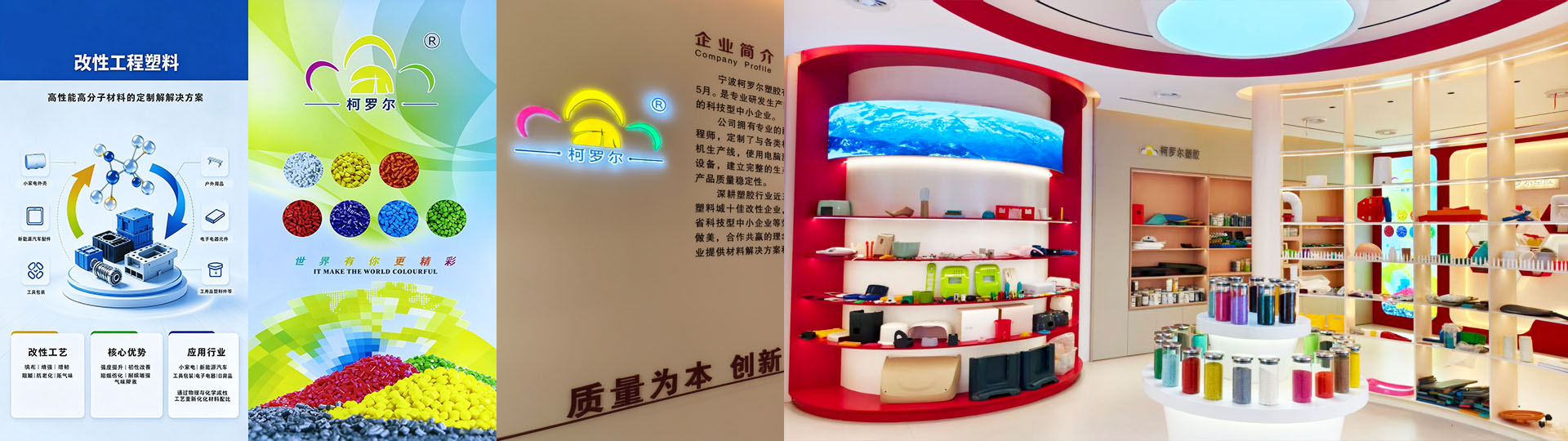
Founded in 2000, Ningbo Colour Plastic Co., Ltd. is located in Yuyao, Ningbo, Zhejiang Province—a major hub of China's plastics distribution and modification industry—at the heart of the Yangtze River Delta clusters for home appliances, auto parts and electronics. It is a high-tech enterprise specializing in custom polymer materials.